When your joints move too far and your muscles are constantly working overtime to compensate, everything hurts. You're exhausted. You've probably been told to just stretch more, or worse, that nothing is really wrong. Living with Ehlers-Danlos Syndrome (Castori, 2012) means your connective tissue doesn't provide the structural support most people take for granted, and that affects everything from how you sit to how you sleep.
I’ve worked with a number of EDS clients over the years. EDS requires a specific approach — the body doesn’t respond the way most bodies do, and what works for most people can backfire here. Aggressive stretching, overly deep work, or manipulations that push already-hypermobile joints further can actively set you back.
How I Work With EDS
Working with EDS requires a fundamental shift in approach. Instead of trying to increase range of motion—which you already have too much of—my focus is on the muscles that are overworking to stabilize your joints (Tinkle et al., 2017). Those muscles are exhausted, locked in chronic contraction, and full of trigger points. That's where the pain lives.
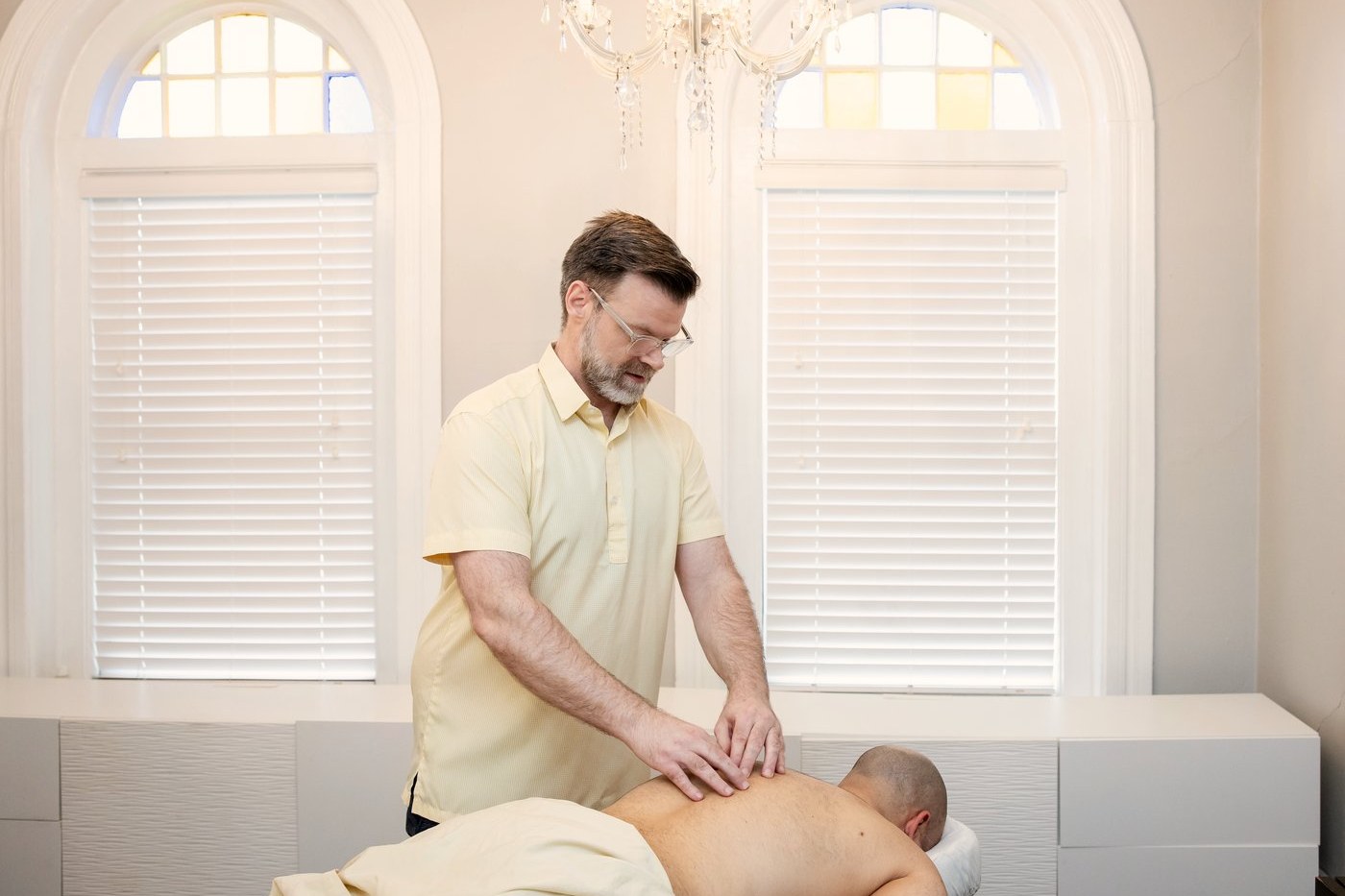
I use neuromuscular therapy and careful myofascial release to address those compensatory tension patterns. The pressure is deliberate and informed. I'm never stretching you further or mobilizing joints that are already unstable. Instead, I'm releasing the muscular tension that's developed because your body is trying to hold itself together.
Every session starts with listening. EDS presents differently in every person, and it can change day to day. I need to understand where you are before I put my hands on you. From there, I work with what your tissue tells me, respecting your body's limits while systematically addressing the pain patterns that are limiting your life.
The goal is to help your muscles recover from the constant strain of compensation. When that tension releases, clients describe feeling lighter, more stable, and in significantly less pain. You can rebuild comfort in your own body. It takes someone who understands what they're working with, and who's willing to adjust the approach to what you actually need.
Working Alongside Your Medical Team
Most EDS clients I see are already working with a team: a physical therapist who understands hypermobility, sometimes a rheumatologist, a pain specialist, maybe a geneticist. Massage isn't a replacement for any of it. It's a specific kind of support that handles a piece the other providers usually don't have time or hands for: the chronic muscular overload that comes from living in a body that doesn't passively hold itself together.
What I won't do: mobilize joints that are already unstable, recommend stretches that push your range further, or claim to address the underlying connective tissue itself. That's not what this work is for. What I will do: release the muscles that are exhausted from compensation, communicate with your PT if that's helpful, and work within whatever boundaries your medical team has set for a given phase of care.
Between sessions, the most useful home care for most EDS clients is gentle heat, rest, and skipping the kind of strengthening or flexibility work that overshoots your range. If something your PT is doing aggravates what we worked on, we'll talk about it. A few clients have found it useful for me to email their PT directly after a first session to coordinate. Happy to do that if you want the two of us on the same page.
References & Further Reading
- Castori M. (2012). Ehlers-Danlos syndrome, hypermobility type: An underdiagnosed hereditary connective tissue disorder with mucocutaneous, articular, and systemic manifestations. ISRN Dermatology, 2012:751768.
- Tinkle BT, Castori M, Berglund B, et al. (2017). Hypermobile Ehlers-Danlos syndrome (a.k.a. Ehlers-Danlos syndrome Type III and Ehlers-Danlos syndrome hypermobility type): Clinical description and natural history. American Journal of Medical Genetics Part C: Seminars in Medical Genetics, 175(1): 48–69.