That first step out of bed in the morning. The sharp, shooting pain in your heel that makes you wince. The way you have to limp through the first few minutes of the day before it eases up a little—only to flare again if you stand too long or push too hard. I've worked with dozens of clients living with plantar fasciitis, and I know how limiting it is when your own feet become the problem.
Here's what's actually happening: the plantar fascia—a thick band of connective tissue that runs along the bottom of your foot from your heel to your toes—is inflamed and under tension. It's pulling hard at the point where it attaches to your calcaneus, the heel bone. But the real culprit isn't always the foot itself. Often it's your calf muscles. When your calf is tight, it creates relentless pull down through the Achilles and into the fascia (Travell & Simons, 1992). Add poor foot mechanics, tight posterior chain muscles, or compensation patterns from an old injury, and the tension compounds. Tightness in the calf chain—particularly the back of the lower leg—is a dominant contributor to plantar fasciitis (Riddle et al., 2003; Bolívar et al., 2013). The fascia tightens. The inflammation persists. The pain lingers.
Why Plantar Fasciitis Actually Sticks Around
Most treatments focus on the heel and the foot. But I look up the chain. Plantar fasciitis is almost always a symptom of a whole-body tension pattern. Your calf muscles—the gastrocnemius and soleus—are chronically tight (DiGiovanni et al., 2003). Your hamstrings are pulling. Your glutes aren't firing properly. Your foot mechanics are compensating. You're maybe walking differently to avoid the pain, which only creates new tension patterns elsewhere. The fascia at the heel never gets a break.
This is why ice, stretching alone, and orthotics offer only temporary relief. They're not addressing the source—the constant, relentless pull from above. You need to release the tension in the calf, rebalance the kinetic chain, and restore proper mechanics. That's where massage therapy steps in.
How I Address Plantar Fasciitis
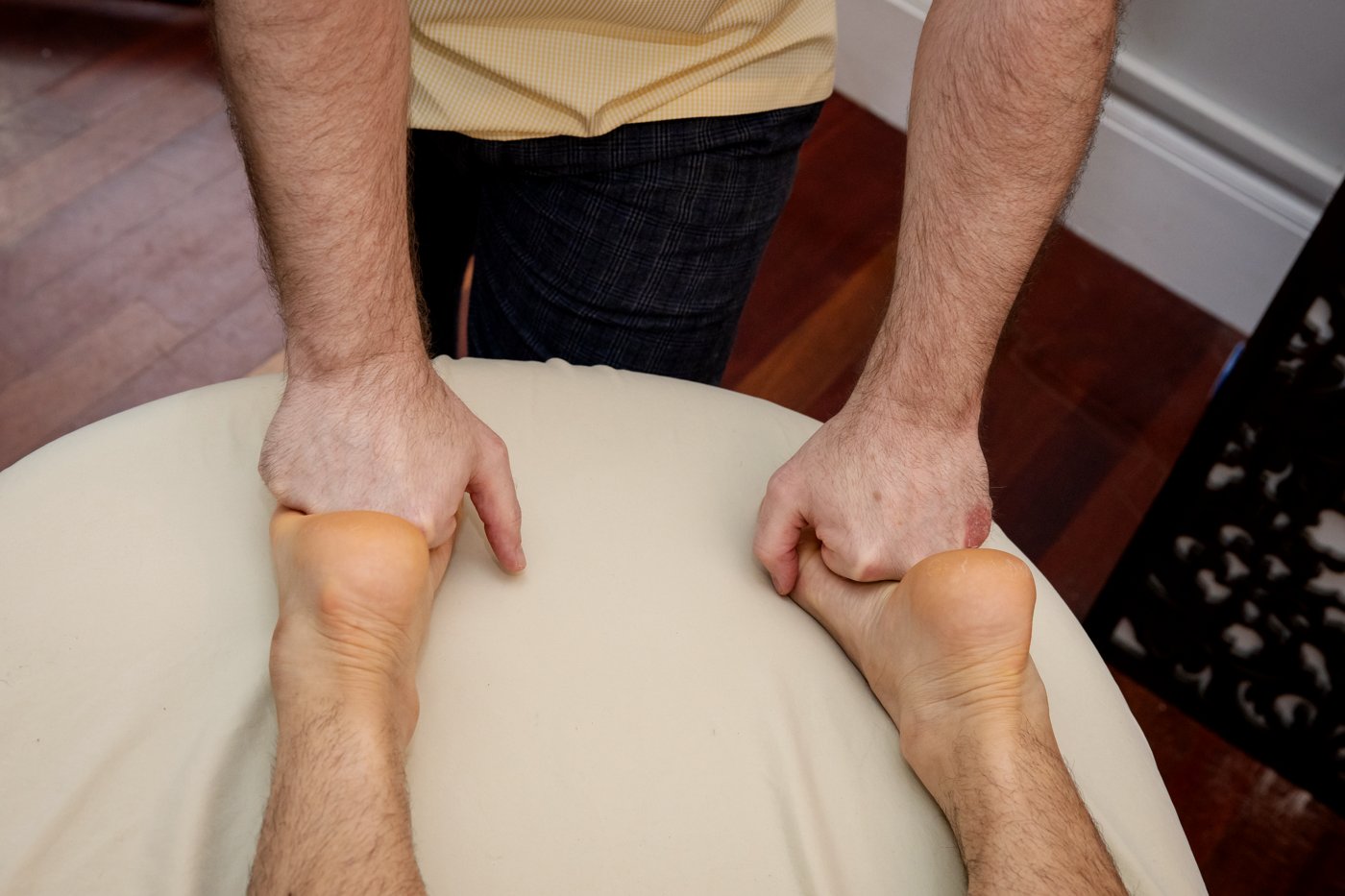
My approach is two-fold: release the source of the pull, and calm the inflamed tissue. I start with deep tissue work on your calf muscles—both the upper calf and the deeper calf muscle. I'm working to release years of accumulated tension that's been pulling on the fascia. I work the plantar surface of your foot itself with techniques that release tension right in the fascia. And I address your whole posterior chain: hamstrings, glutes, and lower back, because compensation patterns often create additional load on the foot.
Your first session begins with assessment. I listen to your history, test your calf and foot mechanics, and understand how your body is moving. Then I apply targeted pressure to release the tight, shortened tissues and restore length and elasticity to the fascia. Most clients notice a meaningful change—less pain in the morning, the ability to stand longer without flaring—within the first 2–3 sessions.
What You Can Do Between Sessions
The work I do in session matters. But what you do at home matters more. Here are the most effective interventions I recommend:
- Rolling: Freeze a water bottle and roll it under your arch for 5–10 minutes daily. The cold reduces inflammation, and the rolling releases tension in the fascia itself. It's simple, effective, and costs nothing.
- Calf stretching: Static stretches on the wall, holding 60 seconds per side, 2–3 times daily. Your calf is the primary driver of fascial tension. Keep it long and mobile.
- Foot mechanics: Pay attention to how you're stepping. Are you rolling through the outside of your foot? Clenching your toes? Avoid going barefoot on hard floors, which forces your foot to work too hard. Wear supportive shoes. And yes, this means good shoes for standing, not fashion choices.
- Avoid aggravation: Long standing, hard workouts, and walking on uneven surfaces can trigger flares. It's less about avoiding activity and more about being smart during your recovery window.
Recovery from plantar fasciitis is real. It doesn't require surgery, injections, or years of management. It requires the right intervention and consistency on your part. Most of my clients are back to their normal routine (pain-free mornings, the ability to walk and stand without limitation) within 4–6 weeks of regular sessions combined with home care. The key is addressing the whole picture, not just the foot.
References & Further Reading
- Riddle DL, Pulisic M, Pidcoe P, Johnson RE. (2003). Risk factors for plantar fasciitis: A matched case-control study. Journal of Bone and Joint Surgery, 85(5): 872–877.
- DiGiovanni BF, Nawoczenski DA, Lintal ME, et al. (2003). Tissue-specific plantar fascia–stretching exercise enhances outcomes in patients with chronic heel pain. Journal of Bone and Joint Surgery, 85(7): 1270–1277.
- Travell JG, Simons DG. (1992). Myofascial Pain and Dysfunction: The Trigger Point Manual. Volume 2: The Lower Extremities. Baltimore: Williams & Wilkins.
- Bolívar YA, Munuera PV, Padillo JP. (2013). Relationship between tightness of the posterior muscles of the lower limb and plantar fasciitis. Foot & Ankle International, 34(1): 42–48.