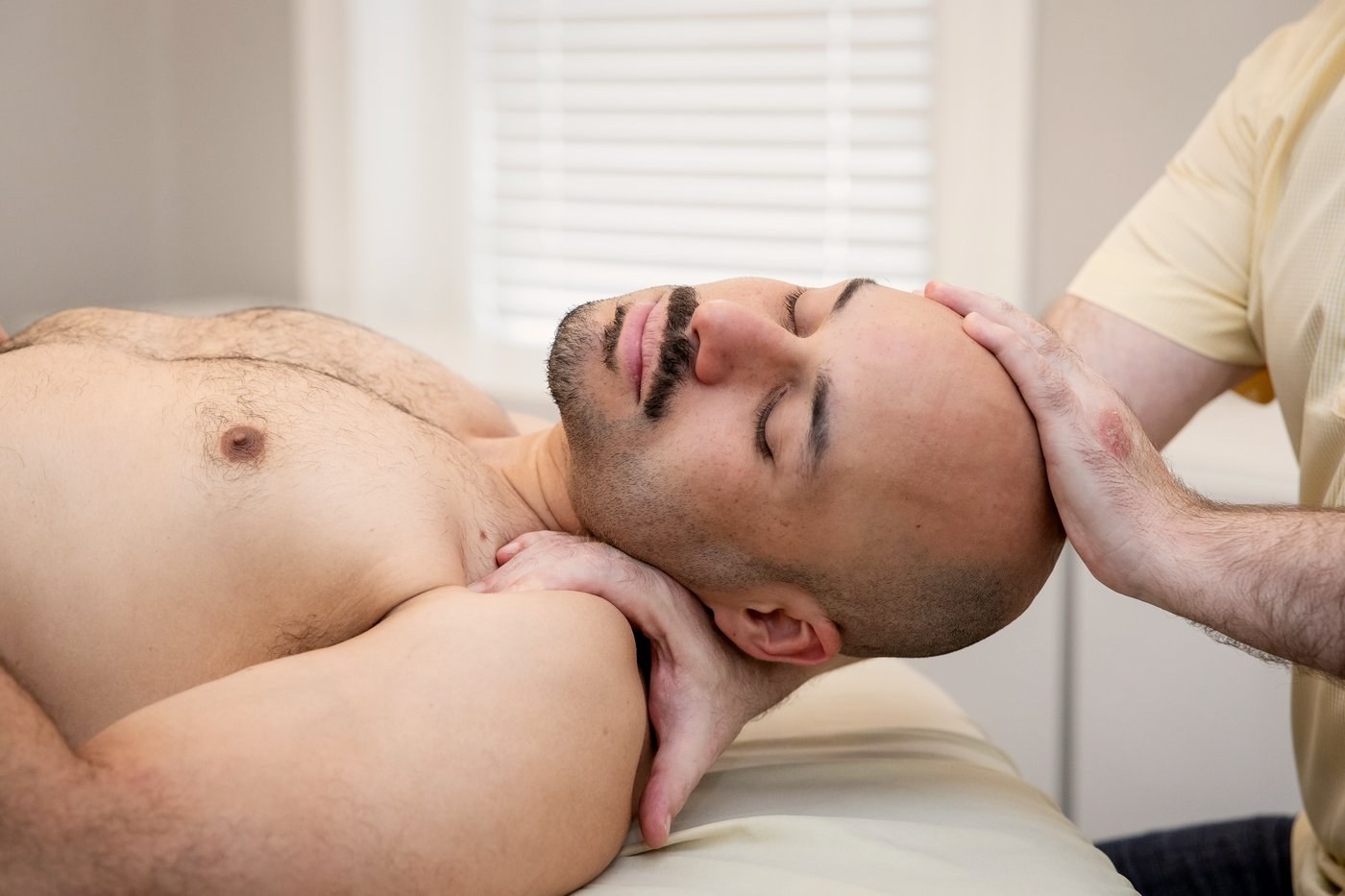
Every session I do ends the same way. You come out of the treatment room dressed and getting your bearings, and I ask: “What feels better? Has the pain improved? How much better?” It’s not small talk. It’s not a formality. It’s the most important moment of the session. And most people aren’t ready for it the first time.
Why the question matters
Most people walk through life disconnected from what their body is telling them. Not because they don’t care, but because few of us were taught how to listen. Pain gets their attention. Everything else gets filed under “fine.” When I ask how you feel after a session, I’m asking you to do something specific: compare this moment to an hour ago. What changed? What’s different? Where was the tension, and is it still there?
The first time I ask, most people say something like “good” or “so much better.” That’s fine as a starting point. But it doesn’t tell either of us much. So I press. Can you be more specific? Where was the pain when you walked in? Is it still there? Does your shoulder feel different from when you got here? Can you turn your head further than you could an hour ago?
Building a vocabulary for your own body
Here’s what happens over the first few sessions. The answers get more specific. Instead of “I feel great,” it becomes “My right shoulder sits lower now — it was up by my ear when I walked in.” Instead of “much better,” it becomes “The pulling sensation behind my knee is gone, but I can still feel tightness in my hamstring.” That specificity isn’t just useful for me. It’s useful for you. Because once you can describe what your body is doing, you can start catching problems earlier — before they turn into the kind of pain that brings you through my door in the first place.
You don’t need medical terminology. You don’t need to know the name of the muscle. “That thing that was pulling when I looked left isn’t pulling anymore” tells me exactly what I need to know. The point isn’t clinical precision. The point is awareness.
Why I don’t let “good” slide
If someone says “I feel good” and can’t tell me anything more specific, I don’t move on. Not because I’m trying to put them on the spot. Because if you can’t tell me what changed, you won’t notice when it changes back. And if you don’t notice when it changes back, you’ll wait until it’s a problem again before you do anything about it.
The whole point of the work I do is to help you take ownership of your body. That means paying attention. It means knowing what “good” actually feels like in specific terms so you can recognize when you’re drifting away from it. It means understanding the difference between “my back is fine” and “my back feels open and my hips are sitting level.” One is a guess. The other is information you can act on.
What this looks like over time
The clients who do best, the ones who recover from chronic patterns and stay recovered, are the ones who develop this awareness. They start coming in and telling me things like: “My right hip has been tighter this week. I think it’s because I’ve been sitting at a different desk.” Or: “My shoulders feel good but my forearms are locked up — I’ve been gripping during deadlifts.” They’re not waiting for me to find the problem. They’re bringing me information I can use immediately.
That’s the shift. You go from being a passenger, hoping someone else will figure out what’s wrong, to being an active participant in your own recovery. You know your body. You know what normal feels like. And when something deviates from that, you catch it early.
The check-in is the practice
I could do excellent technical work on someone for an hour and send them home without this conversation. The tissue work would still be valuable. But something would be missing. Because the session isn’t just about what happens during the hour. It’s about what happens between sessions. And that depends on whether you’re paying attention.
So when I ask you how you feel, take a second. Don’t reach for “good.” Close your eyes if you need to. Move your shoulders. Turn your head. Notice what’s different. Then tell me. That’s where the real work starts.
Related reading: What to expect in your first 4–6 weeks · Let’s help you get strong enough · Why Type A people don’t relax the way everyone tells them to