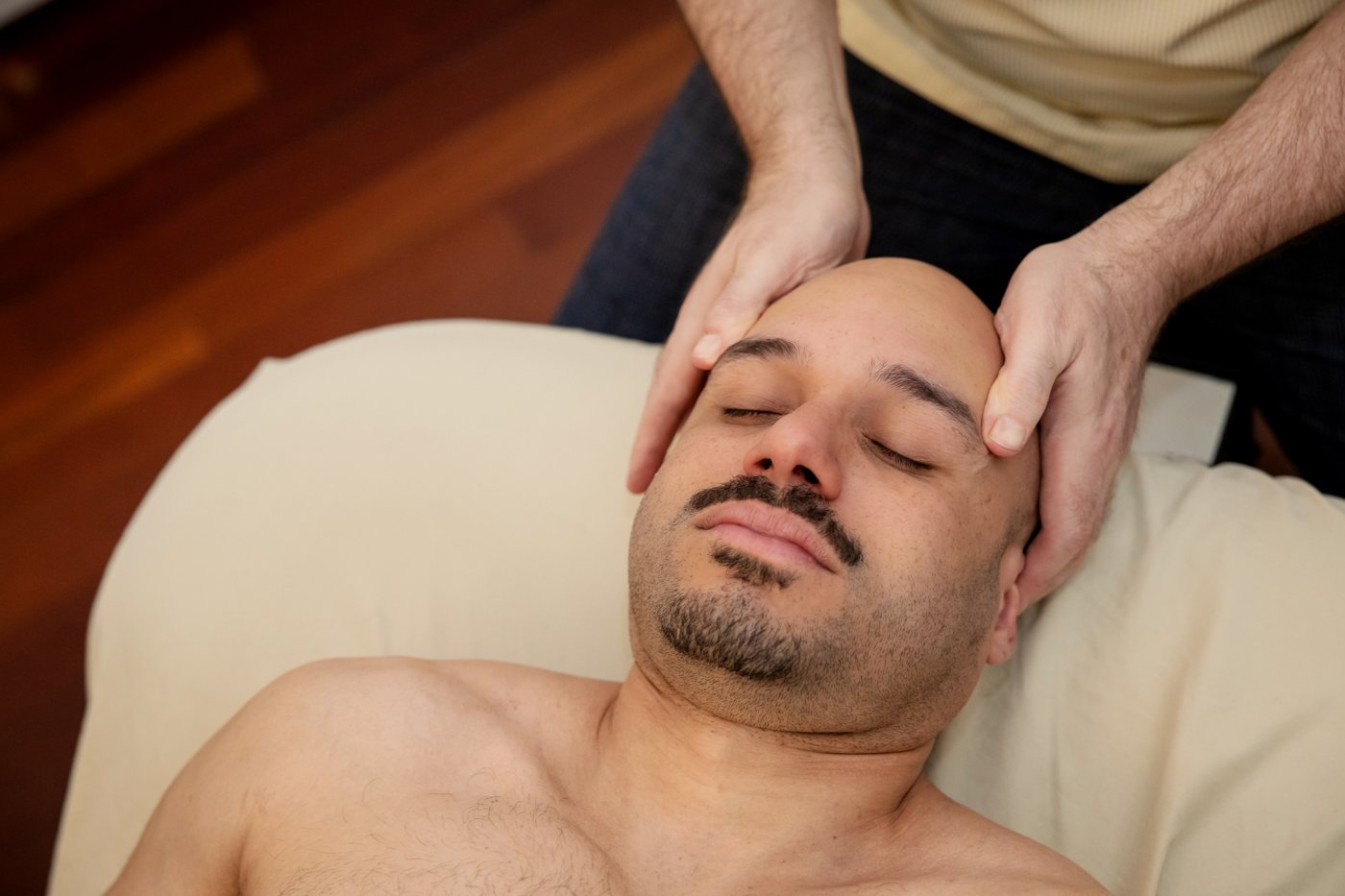
You’ve tried it. The meditation app. The yoga class. The spa day someone bought you as a gift because you clearly needed to slow down. You did all of it. You lay there. You breathed. You waited to feel relaxed.
It didn’t really work, did it.
That’s not a character flaw. That’s your nervous system working exactly as it was built.
High-performing people don’t down-regulate through stillness. They down-regulate through exertion — through pushing, through effort, through physical demand the body trusts. The hard run that clears your head. The workout that burns off whatever the day left behind. The session on my table where the pressure is real and your body finally has something to work with.
Most people have never connected those dots. They know the run helps. They know the workout changes something. But they’ve been told so many times that relaxation means quiet and soft and slow that they’ve started to wonder if something is wrong with them for not getting there that way.
When I work with someone who operates at a high level — and most of my clients do, professionally and physically — I see it immediately. The tissue holds differently. The nervous system is running at a different register. What matters is finding the right door. And that door is rarely the one they expected.
And then I get to watch something I love: the moment they make the connection. When they realize this isn’t just their shoulder feeling better. This is what it actually feels like to be out of the state they live in. Some of them have never felt it before. They feel seen and understood in a way that surprises them.
That’s not a side effect of the massage. That’s the work.
If you’ve always suspected that the path to feeling better runs through effort rather than stillness. You were right. You just needed someone who understands what your body actually needs.
Related reading: Anxiety & stress · Where stress lives in the body · Stress-driven migraines