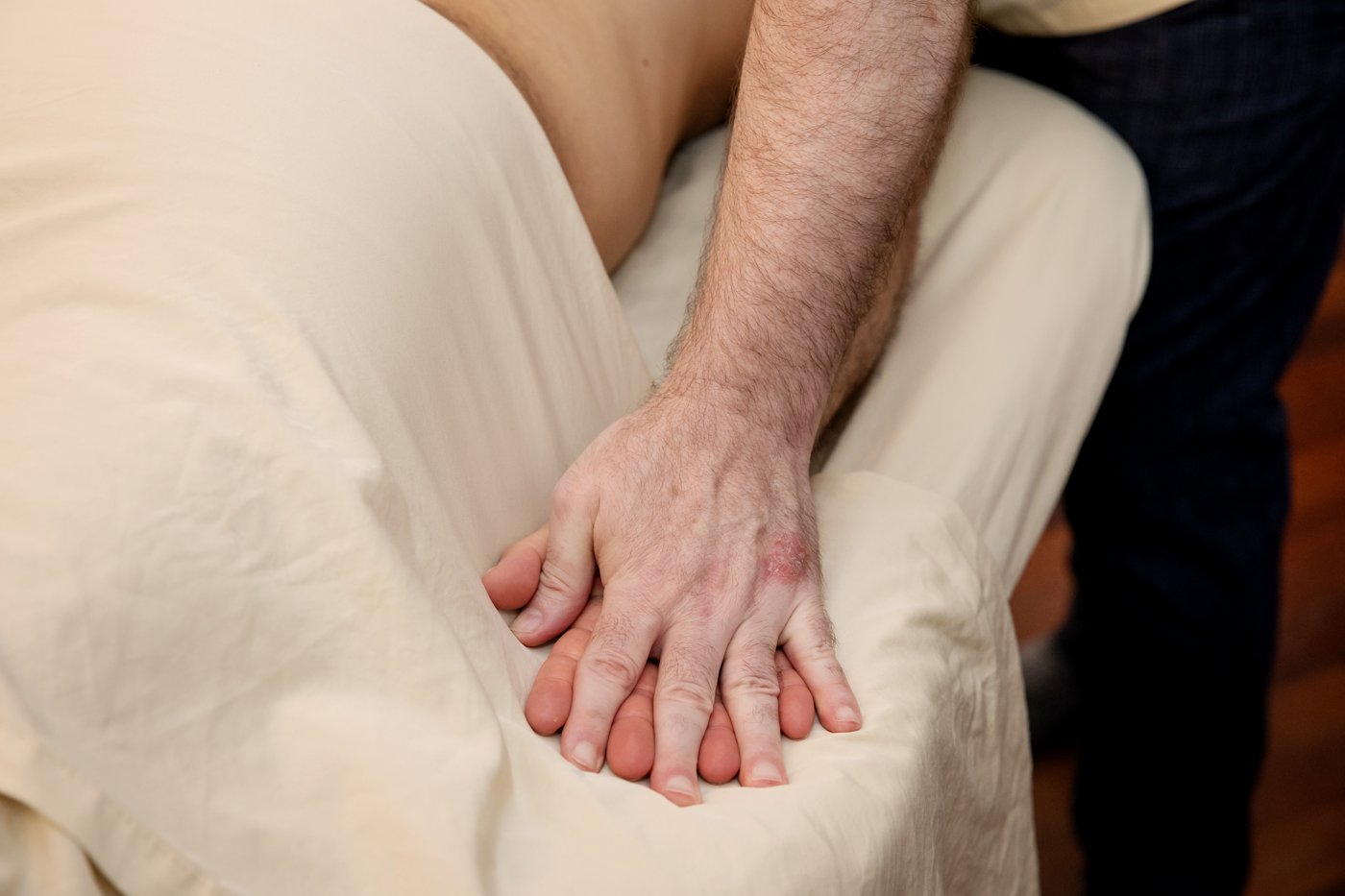
Surgery is stressful on your body even when it goes perfectly. Your muscles brace before the procedure and compensate after it. Scar tissue forms. Surrounding areas tighten to protect the surgical site. The result is often stiffness, reduced range of motion, and pain that lingers long after the incision has closed. Whether you're preparing for a procedure or working through recovery, therapeutic massage can make a meaningful difference in how your body responds.
Before Surgery
Pre-surgical massage focuses on getting your body into the best possible condition before the procedure. That means releasing existing tension, improving circulation, and addressing any compensatory patterns that might complicate your recovery. A body that goes into surgery relaxed and well-circulated tends to recover faster and with fewer complications.
I also use this time to assess your baseline (how your body moves and where you hold tension now) so I have a clear reference point for your post-surgical work. Knowing where you started helps me understand what's changed and what needs attention afterward.
The Post-Op Timeline: When Massage Works Best
The immediate post-operative period (weeks one and two) isn’t massage time. Your incision is still closing. Your body is managing acute inflammation. What you need then is rest, elevation, ice, and your surgeon’s clearance. By week two to four, depending on your procedure and surgical team’s guidance, light massage becomes valuable. Never on the incision itself. Instead, I focus on the muscles surrounding the surgical site, reducing guarding patterns, and helping your lymphatic system manage post-operative swelling. This early work prevents the muscle tightness that will otherwise become your companion for months.
Weeks four through twelve is where the real work happens. Once the incision is fully closed and you have surgeon clearance, we begin addressing scar tissue directly. Myofascial release, tissue mobilization, and controlled pressure help remodel the scar, making it more flexible and less adhesive to surrounding tissue.(Shamus & Shamus, 2015) This is peak effectiveness. The body is still in active remodeling. Compensation patterns haven’t yet calcified into permanent postural changes.
After three months, the window is still open, but the work becomes slower. Scar tissue has matured. Compensation patterns are more entrenched. It’s still worthwhile (I’ve worked with clients a year or two post-op who regained significant mobility), but it takes longer. The lesson: earlier intervention is always easier than late intervention.
Why Compensation Patterns Matter More Than You’d Expect
Here’s what happens after surgery that most people don’t anticipate: your body guards the surgical side. Your brain remembers the trauma. Muscles around the incision tighten protectively. And you, without even thinking about it, shift your weight, change how you walk, alter your reaching patterns. This protects the incision in week two. But in week eight, that same guarding pattern is still active, except now it’s overloading your other knee, your opposite hip, your shoulder on the non-surgical side.
I’ve seen clients who recovered beautifully from hip surgery but developed back pain from favoring one leg. Others who recovered fully from a shoulder procedure but ended up with neck tension from the asymmetrical movement patterns they adopted. The surgery wasn’t the problem. The compensation was.(Travell & Simons, 1992) Through massage combined with movement awareness, we interrupt those patterns before they become chronic. We help your nervous system understand that guarding isn’t necessary anymore. And we restore symmetrical loading so the whole body recovers, not just the surgical site.
Scar Tissue and Movement
Scar tissue is normal. It’s how your body recovers. But scar tissue can become restrictive if it forms adhesions, places where it sticks to underlying muscle or fascia instead of sliding freely. When that happens, your range of motion decreases. Certain movements feel blocked. In knee surgery, this limits bending. In shoulder surgery, it limits reaching. In abdominal surgery, it can affect how your core engages.
Massage doesn’t erase scars, but it can make them more functional. Regular, appropriate pressure (applied once the incision is closed) helps guide the tissue remodeling process. It keeps the scar more pliable. It prevents adhesions from forming. It restores the sliding relationship between layers. Combined with your own movement and strengthening, this transforms how the rebuilt tissue behaves.(Shamus & Shamus, 2015)
Lymphatic Support and Swelling
Post-operative swelling is your body’s inflammatory response to trauma. It’s necessary, but it can also limit your range of motion and slow your progress. Light lymphatic drainage massage (very different from deep tissue work) helps move fluid away from the surgical site and back toward your lymph nodes.(Field, 2014) This isn’t something you can force. But gentle, directional pressure along the lymph pathways makes a real difference in how quickly swelling resolves.
What Your First Post-Op Session Looks Like
Your first appointment starts with a conversation. I want to know your surgery, the date, your surgeon’s clearance, any restrictions they’ve given you, and how you’re feeling now. We take a look at the incision together. I’m looking for signs of full closure, any sensitivity, any restrictions in how far we can safely work near it. Then we assess your range of motion, how your muscles are guarding, and where compensation patterns are starting to show up.
The session itself is gentle, methodical, and focused. If your incision is still relatively fresh, I work away from it entirely, focusing on the surrounding muscles and your lymphatic support. As we progress into the later post-op weeks, we work closer and eventually gently on the scar itself. We never push into pain. We’re looking for the edge of restriction and working just within that. That’s where actual change happens.
Coordinating With Your Surgical Team
Massage works best alongside your surgeon’s protocol and your physical therapy, not as a replacement for either. Tell your surgical team you’re considering massage. Get their clearance before your first session. If they’ve restricted certain movements or given you specific precautions, we honor those completely. If you’re in active recovery and working with a physical therapist, I’ll often email your PT after the first session to confirm what I worked on and what I’m seeing. Coordinating that way keeps our approaches aligned. Bring any restrictions to the first visit (positions you can’t be in, pressure limits, weight-bearing status), and we’ll build the session around what your body can actually tolerate that week.
References & Further Reading
- Travell JG, Simons DG. (1992). Myofascial Pain and Dysfunction: The Trigger Point Manual. Volume 1: The Upper Extremities. Baltimore: Williams & Wilkins. — Foundational work on compensatory guarding patterns following tissue trauma and immobilization.
- Shamus J, Shamus E. (2015). The management of iliotibial band syndrome with a multifaceted approach: A double case report. Journal of Bodywork and Movement Therapies, 19(1): 43–49. — Soft tissue mobilization principles for scar tissue and adhesion remodeling in post-injury recovery.
- Field T. (2014). Massage therapy research review. Complementary Therapies in Clinical Practice, 20(4): 224–229. — Evidence for lymphatic support and post-operative recovery following manual therapy intervention.